Liz Berry at Exeter Community Centre on November 1st 2019 at 7.30pm
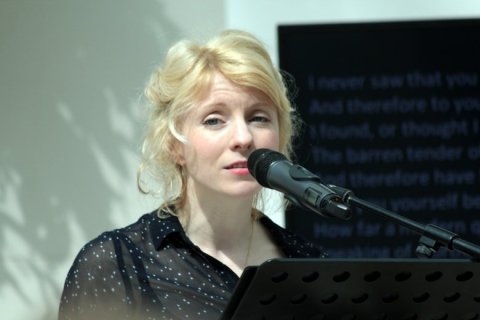
As the first of our occasional series of readings, Liz Berry will be performing in the ballroom of the Exeter Community Centre on Friday November 1st at 7.30pm.
Liz Berry was born in the Black Country and now lives in Birmingham. Her first book of poems, Black Country (Chatto 2014), described as a ‘sooty, soaring hymn to her native West Midlands’ (Guardian) was a Poetry Book Society Recommendation, received a Somerset Maugham Award and won the Geoffrey Faber Memorial Award and Forward Prize for Best First Collection 2014. Her pamphlet The Republic of Motherhood (Chatto, 2018) was a Poetry Book Society Pamphlet choice and the title poem won the Forward Prize for Best Single Poem 2018.
Tickets are £10/£8 and available on the door.
Bodmin Moor Poetry Festival September 27-29 2019
Following their successful one day event in May 2019, our friends at Bodmin Moor Poetry Festival are holding their eighth weekend of poetry and related arts events in Sterts Theatre, Upton Cross, Cornwall on 27th to 29th September 2019.
As usual, they have an exciting and varied line-up of poets and artists across the generations, with readings, workshops, walks, exhibitions and an extravaganza of a community event!
The loose theme is ‘walls/barriers’, commemorating thirty years since the fall of the Berlin Wall. This will be reflected throughout the festival, especially in our community presentation which will feature poetry, visual art, dance, theatre, film, puppetry and music from a wide variety of community and schools groups.
The stellar line-up of poets is an exciting mix of established names and rising stars, including John F Deane, Katrina Porteous, David Morley, Jamie McKendrick, Maurice Riordan, Kathryn Maris, Roger Garfitt, Phoebe Power, Andrew McMillan, Rachael Allen and many more!
FULL WEEKEND TICKET – £60 (including Friday Evening/Saturday/Sunday events)
DAY TICKETS FOR SATURDAY & SUNDAY – £30
WORKSHOPS MUST BE BOOKED AND PAID FOR SEPARATELY – please book in advance as spaces are limited.
The full programme is available here now.
10 years: the future of Exeter Poetry Festival

After 10 good years we are taking a hiatus on Exeter Poetry Festival this year. Thank you to all those who have performed and attended our events. We hope to see you again.
We’re not going away entirely. Every month except August and December on the last Thursday of the month we hold Uncut Poets at Exeter Phoenix at 7.30pm featuring one or two headline readers and ten open mic slots. Keep your eye on our Facebook page for details.
We’ll also be arranging occasional one-off readings in Exeter and already have plans. Subscribe to updates on this web page for details.
Jacqueline Saphra and Melanie Branton with Michelle Madsen at Exeter Poetry Festival at 7.30pm on Saturday 6th October 2018 at Exeter Phoenix
Jacqueline Saphra read drama at university and graduated in screenwriting from the National Film School. She is a former presenter of the highly successful The Shuffle series of readings at the Poetry Society and in 2011 brought out her first full collection, ‘The Kitchen of Lovely Contraptions‘ (Waterways) in 2011. Her collection from Nine Arches Press, ‘All My Mad Mothers’, was shortlisted for the 2017 T.S. Eliot Prize and in the same year ‘A Bargain with the Light: Poems after Lee Miller’ was published by Hercules Editions. She lives in London and teaches at The Poetry School.
Lee Miller, the subject of Jacqueline’s latest work, was an American
photographer and photojournalist who was war correspondent for Vogue magazine during World War II. A collaborator and lover of the artist Man Ray, friend of Picasso and Cocteau, she later married the British surrealist Roland Penrose and moved to Britain.
Event: Jacqueline Saphra and Melanie Branton with Michelle Madsen
Date: Saturday 6th October 2018
Time: 19.30
Price: £6 (£5 concessions)
Tickets: Exeter Phoenix Box Office or on the door
Venue: Exeter Phoenix Dance Studio, Gandy St, Exeter EX4 3LS
Map: Location
The Alex Cluness Memorial Reading with Fiona Benson, Ann Gray, David Woolley and Alasdair Paterson at Exeter City Gate Hotel on Thursday 4th October 2018 at 7.30pm
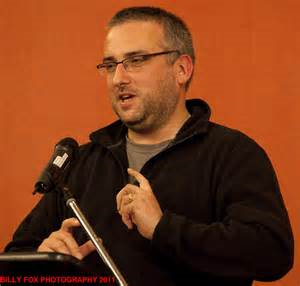
Tonight’s reading celebrates the life and work of Alex Cluness, who died in Scotland earlier this year aged only 49. Alex was an arts administrator and poet whose collections include Mend, 2005, Disguise and Shetland and other poems. He co-founded Literature Works in the South West of England and through it the Exeter Poetry Festival itself, later developing such programmes as Writing Places, One Giant Read and National Memory Day, and setting up Young Writer Groups in more than 60 libraries; he was a prime mover in the project to save Charles Causley’s house and in the establishment of the Grassroots Literature Fund. Back in his native Shetland he worked as Shetland Arts’ first literature development officer, championed the Shetland dialect and later joined the Poetry Archive as a lead Archivist in creating a Scotland collection and archiving the 20 years of the Aldeburgh Poetry Festival.
The evening will feature readings from Fiona Benson and Ann Gray, with contributions from other South West poets who knew Alex: David Woolley and Alasdair Paterson. Some of Alex’s poetry will also be read. Prices are lowered for this event thanks to financial assistance from Literature Works.
Event: The Alex Cluness Memorial Reading
With: Fiona Benson, Ann Gray, David Woolley and Alasdair Paterson
Date: Thursday 4th October 2018
Time: 19.30
Price: £3 (£2 concessions)
Tickets: Exeter Phoenix Box Office or on the door
Venue: City Gate Hotel, Iron Bridge, Exeter, EX4 3RB
Map: Location

Preview reading from the PLAY anthology at the Exeter City Gate Hotel on Monday 1st October 2018 at 7.30pm

The 2018 Exeter Poetry Festival kicks off with a preview event hosted by Simon Williams and Susan Taylor; it features readings from some of the (over 100) contributors to the forthcoming PLAY anthology, which celebrates all aspects of playing. There will be reveals/projections of some of the anthology’s illustrations and a facsimile of the book, proceeds from sales of which will be dedicated to the construction of a play area on Vire Island, Totnes. The area will commemorate Simon and Susan’s beloved grandson Reuben, who died in a car accident late last year.
It will be possible to make advanced orders for the book, which will be published before Christmas.. Meantime, come along and enjoy this free event in the City Gate!
Event: Preview of the PLAY anthology
Date: Monday 1st October
Time: 19.30
Price: Free
Venue: City Gate Hotel, Iron Bridge, Exeter, EX4 3RB
Map: Location
Jacqueline Saphra and Melanie Branton with Michelle Madsen at Exeter Poetry Festival on Saturday 6th October 2018
Melanie Branton‘s first collection, My Cloth-Eared Heart, was published by Oversteps Books in 2017 and her second, Can You See Where I’m Coming From?, is to be published by Burning Eye in November 2018. Her work has appeared in various journals, including The Interpreter’s House, The High Window, Obsessed With Pipework and The Frogmore Papers. She has appeared at festivals including WOMAD, the Bristol Poetry Festival and the Wolverhampton Literary festival and has represented Bristol in two national slam finals.
Event: Jacqueline Saphra and Melanie Branton with Michelle Madsen
Date: Saturday 6th October 2018
Time: 19.30
Price: £6 (£5 concessions)
Tickets: Exeter Phoenix Box Office or on the door
Venue: Exeter Phoenix Dance Studio, Gandy St, Exeter EX4 3LS
Map: Location
Matt Harvey and Kimwei McCarthy at Exeter Poetry Festival on Friday 5th October 2018

Writer, poet, enemy of all that’s difficult and upsetting, Matt Harvey’s way with words has taken him from Totnes to the Wimbledon Tennis Championships via Saturday Live, the Edinburgh Festival and the Work section of the Guardian. He is host of Radio 4’s Wondermentalist Cabaret, creator of Empath Man, and author of The Hole in the Sum of my Parts, Where Earwigs Dare, Mindless Body Spineless Mind and Sit! with artist Claudia Schmid. Recent collaborations include Peck! an opera for schools with Stephen Deazley, and a musical of Rumpelstiltskin with Thomas Hewitt Jones (“wit, charm and great songs” The Guardian)
Event: Matt Harvey and Kimwei McCarthy
Date: Friday 5th October 2018
Time: 19.30
Price: £6 (£5 concessions)
Tickets: Exeter Phoenix Box Office or on the door
Venue: Exeter Community Centre, 17 St Davids Hill, Exeter EX4 3RG
Map: Location
Opportunities for local poets to participate in Exeter Poetry Festival 2018

Uncut Poets with Josephine Corcoran at Exeter Phoenix on Thursday 27th September 2018 at 7.30pm

After its summer furlough, with more than a hint of mists and mellow fruitfulness (and vestigial suntan oil) in the air, Uncut is delighted to welcome Josephine Corcoran as special guest. The last time Josephine read for us, her poetry pamphlet ‘The Misplaced House’ had just been published (tall-lighthouse 2014); now a full collection ‘What Are You After?’ has come out from Nine Arches Press. She is also a writer of fiction and plays and is founder and editor of And Other Poems (www.andotherpoems.com).
The evening will be presented by Alasdair Paterson and, on this occasion, Chrissy Banks as non-mystery co-presenter.
10 open mic spots of 5 minutes each are available and should be applied for here at a.t.paterson@exeter.ac.uk.
Admission is still £5 (£3 open mic and concessions).
 Exeter Poetry Festival